PDF Ebook Kidnapped Souls: National Indifference and the Battle for Children in the Bohemian Lands, 1900–1948, by Tara Zahra
What sort of book Kidnapped Souls: National Indifference And The Battle For Children In The Bohemian Lands, 1900–1948, By Tara Zahra you will choose to? Now, you will not take the published book. It is your time to obtain soft documents book Kidnapped Souls: National Indifference And The Battle For Children In The Bohemian Lands, 1900–1948, By Tara Zahra instead the printed documents. You can enjoy this soft data Kidnapped Souls: National Indifference And The Battle For Children In The Bohemian Lands, 1900–1948, By Tara Zahra in at any time you expect. Even it is in expected area as the various other do, you can read the book Kidnapped Souls: National Indifference And The Battle For Children In The Bohemian Lands, 1900–1948, By Tara Zahra in your gizmo. Or if you want more, you can continue reading your computer system or laptop to obtain complete display leading. Juts find it here by downloading the soft data Kidnapped Souls: National Indifference And The Battle For Children In The Bohemian Lands, 1900–1948, By Tara Zahra in web link page.
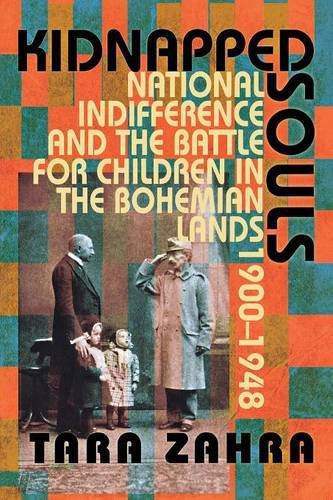
Kidnapped Souls: National Indifference and the Battle for Children in the Bohemian Lands, 1900–1948, by Tara Zahra

PDF Ebook Kidnapped Souls: National Indifference and the Battle for Children in the Bohemian Lands, 1900–1948, by Tara Zahra
How if there is a website that allows you to search for referred publication Kidnapped Souls: National Indifference And The Battle For Children In The Bohemian Lands, 1900–1948, By Tara Zahra from all around the world author? Automatically, the site will be extraordinary finished. Numerous book collections can be found. All will certainly be so easy without complex thing to move from site to website to obtain the book Kidnapped Souls: National Indifference And The Battle For Children In The Bohemian Lands, 1900–1948, By Tara Zahra desired. This is the website that will provide you those assumptions. By following this website you could obtain whole lots varieties of publication Kidnapped Souls: National Indifference And The Battle For Children In The Bohemian Lands, 1900–1948, By Tara Zahra compilations from variations types of writer as well as publisher preferred in this globe. Guide such as Kidnapped Souls: National Indifference And The Battle For Children In The Bohemian Lands, 1900–1948, By Tara Zahra as well as others can be gotten by clicking nice on web link download.
Reading Kidnapped Souls: National Indifference And The Battle For Children In The Bohemian Lands, 1900–1948, By Tara Zahra is an extremely helpful passion and also doing that can be undertaken at any time. It indicates that reading a book will not restrict your activity, will not require the moment to spend over, and won't invest much money. It is a quite cost effective and also reachable thing to buy Kidnapped Souls: National Indifference And The Battle For Children In The Bohemian Lands, 1900–1948, By Tara Zahra Yet, with that said extremely inexpensive point, you can obtain something new, Kidnapped Souls: National Indifference And The Battle For Children In The Bohemian Lands, 1900–1948, By Tara Zahra something that you never do and get in your life.
A brand-new experience could be acquired by reviewing a book Kidnapped Souls: National Indifference And The Battle For Children In The Bohemian Lands, 1900–1948, By Tara Zahra Even that is this Kidnapped Souls: National Indifference And The Battle For Children In The Bohemian Lands, 1900–1948, By Tara Zahra or various other book collections. Our company offer this publication due to the fact that you can find a lot more things to encourage your skill as well as understanding that will make you better in your life. It will certainly be likewise helpful for individuals around you. We suggest this soft documents of the book below. To know the best ways to get this publication Kidnapped Souls: National Indifference And The Battle For Children In The Bohemian Lands, 1900–1948, By Tara Zahra, learn more right here.
You could locate the web link that our company offer in website to download and install Kidnapped Souls: National Indifference And The Battle For Children In The Bohemian Lands, 1900–1948, By Tara Zahra By acquiring the budget-friendly price as well as get finished downloading and install, you have actually finished to the initial stage to obtain this Kidnapped Souls: National Indifference And The Battle For Children In The Bohemian Lands, 1900–1948, By Tara Zahra It will be absolutely nothing when having actually purchased this publication as well as not do anything. Review it and disclose it! Spend your few time to merely check out some sheets of page of this book Kidnapped Souls: National Indifference And The Battle For Children In The Bohemian Lands, 1900–1948, By Tara Zahra to read. It is soft data and also easy to read wherever you are. Appreciate your new practice.
Throughout the nineteenth and into the early decades of the twentieth century, it was common for rural and working-class parents in the Czech-German borderlands to ensure that their children were bilingual by sending them to live with families who spoke the "other" language. As nationalism became a more potent force in Central Europe, however, such practices troubled pro-German and pro-Czech activists, who feared that the children born to their nation could literally be "lost" or "kidnapped" from the national community through such experiences and, more generally, by parents who were either flexible about national belonging or altogether indifferent to it.
Highlighting this indifference to nationalism―and concerns about such apathy among nationalists―Kidnapped Souls offers a surprising new perspective on Central European politics and society in the first half of the twentieth century. Drawing on Austrian, Czech, and German archives, Tara Zahra shows how nationalists in the Bohemian Lands worked to forge political cultures in which children belonged more rightfully to the national collective than to their parents. Through their educational and social activism to fix the boundaries of nation and family, Zahra finds, Czech and German nationalists reveal the set of beliefs they shared about children, family, democracy, minority rights, and the relationship between the individual and the collective. Zahra shows that by 1939 a vigorous tradition of Czech-German nationalist competition over children had created cultures that would shape the policies of the Nazi occupation and the Czech response to it.
The book's concluding chapter weighs the prehistory and consequences of the postwar expulsion of German families from the Bohemian Lands. Kidnapped Souls is a significant contribution to our understanding of the genealogy of modern nationalism in Central Europe and a groundbreaking exploration of the ways in which children have been the objects of political contestation when national communities have sought to shape, or to reshape, their futures.
- Sales Rank: #691867 in Books
- Brand: Brand: Cornell University Press
- Published on: 2011-08-01
- Original language: English
- Number of items: 1
- Dimensions: 9.10" h x .90" w x 6.10" l, 1.00 pounds
- Binding: Paperback
- 304 pages
Features
- Used Book in Good Condition
Review
"Solidly anchored in archival research, this book is situated squarely within the history of the European welfare state and helps blur the line between 'us' and 'them/the Other' that still exists between 'Eastern' and 'Western' European historiography. With her judicious use of comparative material, Zahra not only provides fascinating comparisons between Nazi treatment of children and families in the wartime Protectorate and occupied Poland during the war, but also with France. This volume is of interest to modern European historians in general and especially those interested in family history and nationalism studies. A tour de force, it is among the most innovative monographs on Habsburg Central European history to appear in recent years."―German Studies Review
"Tara Zahra's finely researched, engagingly written book . . . makes two central points. First, exclusive national identification was neither a natural nor an inevitable development in multi-linguistic central Europe. And second, competing nationalists had to work hard to win the allegiance of 'nationally ambiguous' Bohemians and Moravians. The nationalists' persistent sense of failure motivated their nationalizing efforts as much as their successes. Zahra astutely focuses on nationalist campaigns for the 'souls' of school children in Bohemia and Moravia. Not only were schools a central battleground in conflicts between Czech and German nationalists over the control of public resources; they were also an active front in the struggles of both sides to eradicate national indifference. . . . Zahra's book makes many contributions to several different literatures, including comparative studies of nationalism, the history of the welfare state, and the history of pedagogy. Most striking for me, though, was her ability to write a truly Bohemian history, rather than a Czech or German one. Not only are Czech and German histories intimately intertwined in this book, they are in fact unthinkable without each other. Drawing on Rogers Brubaker's call "to see nations as 'perspectives on the world' rather than 'things in the world'" (p. 8), Zahra shows how Czech and German nationalist perspectives related directly to each other, finding meaning in their relationship to the other. The persistence of national indifference―the fuzzy margins between Czech and German national communities―maintained the salience of these national perspectives, while at the same time casting doubt on their substantive differences."―H-German, H-Net Reviews, February 2009
"This innovative, thoroughly researched, comprehensive book breaks with traditional scholarship in important respects and poses fresh new historical questions. It is sure to be mined by a generation of readers for its rich contextualization and thoughtful analyses."―American Historical Review
"Tara Zahra captures and exhibits the elusive with remarkable documentation, impressive hard work, and exemplary historian's craft. Kidnapped Souls is not only an excellent book for providing the history of the essentially invisible actors (children), but, is also an exceptional achievement in writing the history of an absence (indifference to nationalism)."―Canadian Journal of History
(Canadian Journal of History)
"Tara Zahra's finely researched, engagingly written book . . . makes two central points. First, exclusive national identification was neither a natural nor an inevitable development in multi-linguistic central Europe. And second, competing nationalists had to work hard to win the allegiance of 'nationally ambiguous' Bohemians and Moravians. The nationalists' persistent sense of failure motivated their nationalizing efforts as much as their successes. Zahra astutely focuses on nationalist campaigns for the 'souls' of school children in Bohemia and Moravia. Not only were schools a central battleground in conflicts between Czech and German nationalists over the control of public resources; they were also an active front in the struggles of both sides to eradicate national indifference. . . . Zahra's book makes many contributions to several different literatures, including comparative studies of nationalism, the history of the welfare state, and the history of pedagogy. Most striking for me, though, was her ability to write a truly Bohemian history, rather than a Czech or German one. Not only are Czech and German histories intimately intertwined in this book, they are in fact unthinkable without each other. Drawing on Rogers Brubaker's call "to see nations as 'perspectives on the world' rather than 'things in the world'" (p. 8), Zahra shows how Czech and German nationalist perspectives related directly to each other, finding meaning in their relationship to the other. The persistence of national indifference―the fuzzy margins between Czech and German national communities―maintained the salience of these national perspectives, while at the same time casting doubt on their substantive differences."―H-German, H-Net Reviews, February 2009
"Tara Zahra has written a pioneering work that brings together the most complex issues of nations and nationalism with the history of the family and the history of childhood. Focusing on Bohemia from the late Habsburg monarchy through World War II, this brilliantly conceived book illuminates our historical understanding of nationhood and childhood, their relation to one another, and the crucial importance of that relation for modern European history."―Larry Wolff, New York University, author of Inventing Eastern Europe
"In Kidnapped Souls, Tara Zahra reveals an incredible talent for archival sleuthing. She masterfully accomplishes what many historians neglect to attempt by giving voice to those very anonymous historical actors whose opinions and perspectives nationalists have labored to silence. Far from being too simple to merit attention, these parents and children, students and citizens had a nuanced and contextualized conception of 'nation' that historians must, if not admire and emulate, then at least acknowledge and seek to understand."―Alison Frank, Harvard University
"Tara Zahra tells us that the nationality struggle in the Czech lands was fierce because people did not care about nationality. But everyone―nationalist or not―cared about children,though often in harshly conflicting ways. From these original insights Zahra takes us through a half century of Central Europe's history, discovering and illuminating unknown stretches of modern nationalism's most heavily explored terrain. But she not only remaps her subject: she reconstitutes it."―John Connelly, University of California, Berkeley
"In Kidnapped Souls, Tara Zahra reconceptualizes significant parts of the Central European past. She engages productively with cutting-edge scholarship in several fields and deftly analyzes aspects of nationalism, childhood and the family, the European welfare state, and Nazism."―Jeremy King, Mount Holyoke College
"Kidnapped Souls brilliantly details how Czech and German nationalists attempted to claim, secure, and then mold children for their respective nations―often in the face of stiff resistance from nationally indifferent parents. Along the way, it offers thought-provoking analyses of the rise of the welfare state, interwar democracy, domestic life under Nazi rule, and the rise and fall of a forgotten political culture in the Bohemian Lands. Ambitious in its chronological breadth and supported by a dizzying array of archival sources, the book challenges historians of Europe to rethink many fundamental presumptions about the aims and successes of modern national movements."―Chad Bryant, The University of North Carolina at Chapel Hill
From the Back Cover
"Tara Zahra has written a pioneering work that brings together the most complex issues of nations and nationalism with the history of the family and the history of childhood. Focusing on Bohemia from the late Habsburg monarchy through World War II, this brilliantly conceived book illuminates our historical understanding of nationhood and childhood, their relation to one another, and the crucial importance of that relation for modern European history." --Larry Wolff, New York University, author of Inventing Eastern Europe
"In Kidnapped Souls, Tara Zahra reveals an incredible talent for archival sleuthing. She masterfully accomplishes what many historians neglect to attempt by giving voice to those very anonymous historical actors whose opinions and perspectives nationalists have labored to silence. Far from being too simple to merit attention, these parents and children, students and citizens had a nuanced and contextualized conception of 'nation' that historians must, if not admire and emulate, then at least acknowledge and seek to understand."--Alison Frank, Harvard University
"Tara Zahra tells us that the nationality struggle in the Czech lands was fierce because people did not care about nationality. But everyone--nationalist or not--cared about children,though often in harshly conflicting ways. From these original insights Zahra takes us through a half century of Central Europe's history, discovering and illuminating unknown stretches of modern nationalism's most heavily explored terrain. But she not only remaps her subject: she reconstitutes it."--John Connelly, University of California, Berkeley
"In Kidnapped Souls, Tara Zahra reconceptualizes significant parts of the Central European past. She engages productively with cutting-edge scholarship in several fields and deftly analyzes aspects of nationalism, childhood and the family, the European welfare state, and Nazism."--Jeremy King, Mount Holyoke College
"Kidnapped Souls brilliantly details how Czech and German nationalists attempted to claim, secure, and then mold children for their respective nations--often in the face of stiff resistance from nationally indifferent parents. Along the way, it offers thought-provoking analyses of the rise of the welfare state, interwar democracy, domestic life under Nazi rule, and the rise and fall of a forgotten political culture in the Bohemian Lands. Ambitious in its chronological breadth and supported by a dizzying array of archival sources, the book challenges historians of Europe to rethink many fundamental presumptions about the aims and successes of modern national movements."--Chad Bryant, The University of North Carolina at Chapel Hill
About the Author
Tara Zahra is Associate Professor of History at the University of Chicago.
Most helpful customer reviews
0 of 0 people found the following review helpful.
Four Stars
By Stephen ogletree
Good read
3 of 4 people found the following review helpful.
Is this the real life? Is this just fantasy?
By cxlxmx
The term "national indifference" here refers to the feelings/beliefs of early 20th century inhabitants of Bohemia vis-a-vis the developing German and Czech nation-state ideologies. Rather than land rights, craft/art, etc, these relationships are examined through the prism of conflicts over children. In this story, children presented a potential problem for nationalists due to their ideological blank slate status, a problem that was heightened in a region such as Bohemia where populations were claimed by two competing ideological bodies. According to Zahra, the resulting conflicts reveal an underlying state of indifference to the concerns of nationalists that might go undiscovered under the story of national identification revealed through sources created by the nationalists themselves. Moreover, later in the century, this national indifference laid the ground for conceptual and legal conflicts in Bohemia over questions that manifested themselves as geopolitical and logistical conflicts in other parts of Europe.
The book is well-written and the author is obviously well-read, not only in the literature but in archival material. Most of the original research seems to have been done in relation to the pre-WWII period, and so I take this to be the core of the argument. I am not totally convinced, however. It is not so much that there is a failure to make a case here but that I'm unconvinced of the dichotomous nature of identity. For academicians, the nation-state, nationalism, and modernity are specific forms of technical jargon, but the term identity, as in "national identity," is not, being the point at which abstract analysis meets lived experience. A prime piece of evidence here is the documentation of family complainants attempting to have their children sent to the schools of their choice rather than the schools dictated by nationalist bureaucrats. While this is "national indifference" in the sense that nationalist sentiment is not shown to be commensurate between parents and bureaucrats, official documents, in which opinion can be obfuscated behind a veil of bargaining within an institutional marketplace, is not a convincing documentation of identity. In addition to the question whether complainants understood the conflict presented by bureaucrats, it begs the question of the place of institutional careerist concerns as against conformity of identity amongst "nationalists". And did Bohemians who insisted on their Bohemianism as against Czech or German lack a nationalist concept or have a different historical memory from the one we recognize? If we accept a definition of nationalism that is so narrow it admits no internal conflict, it cannot have much analytic power. Nationalism is not ethnic epiphany, but they are not historically unrelated and there must be a gray area between indifference and identification with collective ends. But this is as much a criticism of academicians as this book.
The latter part of the book is an interesting look at child policies of the Third Reich in Bohemia and how these differed from Reich policies in other lands due to the ambiguities of language and ethnicity in this German-Czech border area. The prism of national indifference works well here to prime the analytic juices, and the story of conflict over children and child policies is well-illuminated by being told in the context of the immediate post-Hapsburg history of Bohemia.
A subtopic of the book is an analysis of an alternative view of childrearing from the common nuclear family. In this story, cooperative and corporate childrearing practices in the Bohemian lands lend a feminist critique of modern life, revealing alternative modes of conceptualizing the place of women and families in society. This story I find is fairly unsupported and turns into a topsy-turvy ideological world of areality in discussing WWII. In fact, much of the evidence presented on a range of topics in this book tacitly confirm that, whether coming from the Bohemian peoples themselves or from the corporate perspective of nationalisms, children are primarily the preserve of parents with mothers as the primary force behind education and habituation. For example, the concept of child-exchange in pre-nationalist Bohemia (in which children went on "study-abroad" programs with other Bohemian families) presupposes a conception of the family as the primary category of child-development. Likewise, the concerns of pre-war German nationalists over finding foster homes in which the women were sufficiently ideological demonstrates that, even where children were considered within the purview of corporate rights and responsibilities, it was families and primarily women that were considered not only the sufficient labor of ideological instruction but also the necessary capital. The argument presented in chapter 3 that the expanding welfare state was not a novel form of communal claim on children only reinforces the point that extra-organic appartus were not seen as necessary to national health.
Later in the book, in discussions of National Socialist child policies and the post-WWII period, the argument is advanced that, because Germanization policies emphasized maintaining a "German" home, post-war characterizations of collectivist competition with the home in childrearing as totalitarian are de-legitimized. This position could only be advanced under pre-factual assumptions. Importantly, these are not a fortiori arguments but Orwellian ones, twisting not only reality but the language we use to describe it as collectivist competition with the home is almost the definition of totalitarianism. Again, the story told in the book does not support the conclusions. There were clearly qualitative as well as quantitative changes in the collectivist treatment of children as totalitarianism ratcheted up throughout the war. Collectivist child-centered policies changed from attempts to identify, preserve, and support nationalities vis-a-vis neighbors to conflicts over the future of existence and the subjugation of women and children to state ends. Especially, note the Reich policy of telling women who had chosen to stay at home that they must return to factories, and note the Reich's creation of Czech youth groups for the purpose not of preserving Czech culture but of controlling those populations. In the end it is hard to see that the claim that criticizing totalitarian intervention in the home does not do justice to the experiences of women collapses into anything but an argument that any criticism of state intervention is nigh to denying women the right to work. The position supported here takes as assumptions some of the worst aspects of individualistic capitalism (the belief that people are fundamentally separate from any sort of organic community) to create an argument in favor of some of the worst aspects of socialism (the belief that state ends create the conditions for liberation). Minus one star!
The author is clearly intelligent and works this material easily. While retaining a professional voice, personality and even humor seep into the prose: "The winners of a democratic nation-state are the recipients of a great deal of mail." From the preface, it is clear that the author enjoys her life in academia and enjoyed producing this book, although at times I feel her ability to create facts out of arguments would have served her well in the legal profession instead.
2 of 3 people found the following review helpful.
Winner of the 2011 Laura Shannon Prize for European Studies
By Monica Caro
This work by Tara Zahra received the 2011 Laura Shannon Prize for European Studies, an award which carries a $10,000 prize and is administered by the Nanovic Institute for European Studies at the University of Notre Dame. The jury statement reads, "A work of extraordinary scholarly creativity and excavation, Tara Zahra's Kidnapped Souls: National Indifference and the Battle for Children in the Bohemian Lands 1900-1948, explores Czech-German relations in the first half of the twentieth century to address from a fresh archival angle larger questions about national identification, indifference, and the use of constituencies for national agendas. Working deeply in multiple national archives, Zahra examines policies toward children and schooling in a border region of Bohemia in which partisans of Czech and German identity competed for allegiance. Without ever losing sight of big questions or Hauptpolitik, Zahra enlivens every page with vivid detail and takes us into ordinary lives to show not that national identity is merely a matter of cultural and political circumstance, but that particular circumstances cause claims on identity to work in different ways. A model monograph, with interesting lessons for the future of multilingualism in European educational systems." The final jury was composed of Nancy Bermeo, Nuffield Professor of Comparative Politics, Nuffield College, University of Oxford; Laura Engelstein, Henry S. McNeil Professor of History, Yale University; Felipe Fernández-Armesto, William P. Reynolds Professor of History, University of Notre Dame; James Sheehan, Dickason Professor in the Humanities, Emeritus, Stanford University; Catherine H. Zuckert, Nancy Reeves Dreux Professor of Political Science, University of Notre Dame. For more information about the book and the Shannon Prize, visit [...].
See all 3 customer reviews...
Kidnapped Souls: National Indifference and the Battle for Children in the Bohemian Lands, 1900–1948, by Tara Zahra PDF
Kidnapped Souls: National Indifference and the Battle for Children in the Bohemian Lands, 1900–1948, by Tara Zahra EPub
Kidnapped Souls: National Indifference and the Battle for Children in the Bohemian Lands, 1900–1948, by Tara Zahra Doc
Kidnapped Souls: National Indifference and the Battle for Children in the Bohemian Lands, 1900–1948, by Tara Zahra iBooks
Kidnapped Souls: National Indifference and the Battle for Children in the Bohemian Lands, 1900–1948, by Tara Zahra rtf
Kidnapped Souls: National Indifference and the Battle for Children in the Bohemian Lands, 1900–1948, by Tara Zahra Mobipocket
Kidnapped Souls: National Indifference and the Battle for Children in the Bohemian Lands, 1900–1948, by Tara Zahra Kindle
Kidnapped Souls: National Indifference and the Battle for Children in the Bohemian Lands, 1900–1948, by Tara Zahra PDF
Kidnapped Souls: National Indifference and the Battle for Children in the Bohemian Lands, 1900–1948, by Tara Zahra PDF
Kidnapped Souls: National Indifference and the Battle for Children in the Bohemian Lands, 1900–1948, by Tara Zahra PDF
Kidnapped Souls: National Indifference and the Battle for Children in the Bohemian Lands, 1900–1948, by Tara Zahra PDF


